
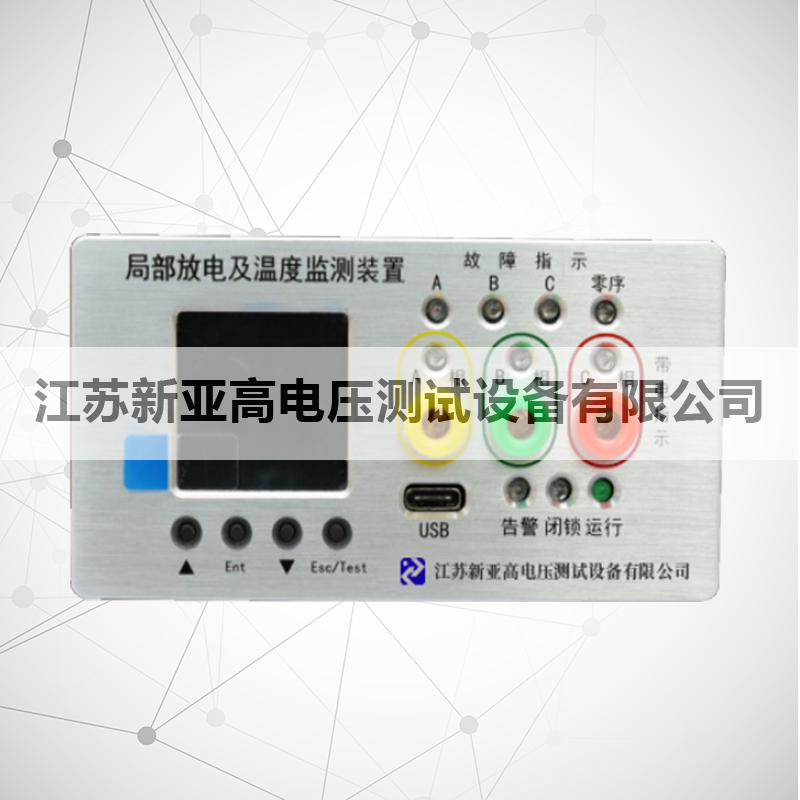
 Partial Discharge and Temperature Monitoring Device (Four-in-One)
Partial Discharge and Temperature Monitoring Device (Four-in-One)
The partial-discharge and temperature monitoring device is an online monitoring device installed on primary switchgear in power distribution networks, such as ring main unit switchgear, cable branch boxes and box-type substations. It is used for online monitoring of partial discharge, indicating short-circuit and ground faults in corresponding cable sections, and monitoring real-time temperature. The pulse-current method is a widely recognized and widely used method for measuring partial-discharge quantity, with results expressed in pC.
Product overview
The partial-discharge and temperature monitoring device is an online monitoring device installed on primary switchgear in power distribution networks, such as ring main unit switchgear, cable branch boxes and box-type substations. It is used for online monitoring of partial discharge, indicating short-circuit and ground faults in corresponding cable sections, and monitoring real-time temperature.
The pulse-current method is a widely recognized and widely used method for measuring partial-discharge quantity. Its result is the apparent discharge quantity expressed in pC, a quantitative measurement that can objectively reflect the insulation condition of electrical equipment. Among various types of switchgear, switchgear at voltage levels of 10kV and above has the largest number of installations and the most failures, with very serious consequences. Therefore, online monitoring of partial discharge and temperature rise in switchgear at voltage levels of 10kV and above not only helps assess equipment insulation, but also enables timely detection of many manufacturing and installation problems and determination of the cause and severity of insulation faults.
The device also integrates cable temperature monitoring, high-voltage live indication and fault indication. It combines measurement, analysis and diagnosis in a TFT color-screen interface, helping inspection personnel assess switchgear insulation, reduce operation and maintenance costs, address potential insulation hazards promptly, and improve the reliability of power-distribution equipment.
Features
-
Real-time temperature: The electronic CT detects cable temperature during operation and transmits the real-time temperature to the host via optical fiber for display on the host screen.
-
Short-circuit alarm indication: When the line current reaches or exceeds the preset short-circuit current setting, the electronic CT sends an alarm signal to the host via optical fiber.
-
Ground-fault alarm indication: When the line current reaches or exceeds the preset ground-fault current setting, the electronic CT sends an alarm signal to the host via optical fiber.
-
Temperature alarm indication: When the line temperature reaches or exceeds the preset temperature setting, the electronic CT sends an alarm signal to the host via optical fiber.
-
Partial-discharge detection technology using the pulse-current method, with high monitoring sensitivity.
-
Complies with the international standard IEC60270 for partial-discharge detection and enables quantitative measurement of discharge.
-
Fully featured, integrating a fault indicator, high-voltage live indicator and cable temperature measurement.
-
Uses adaptive anti-interference technology to effectively eliminate on-site background-noise interference.
-
Continuously monitors equipment insulation defects online in real time and promptly detects abnormal operating conditions in electrical equipment.
-
Probability intensity, discharge frequency, energized status, fault indication, cable temperature and other information are displayed locally on a TFT color screen.
-
RS485 communication enables comprehensive big-data diagnostics for more accurate results.
-
Built-in partial-discharge diagnostic analysis and an alarm algorithm incorporating cable-head temperature. When partial discharge is detected in high-voltage equipment, the LED alarm light remains on and the relay alarm contact signals an equipment abnormality.
Technical Specifications
-
Measurement range: 0~5000pC
-
Sensitivity: not less than 100pC
-
Measurement accuracy: discharge-intensity measurement not less than 5%; discharge-frequency measurement not less than 2%
-
Frequency range: 100kHz~5MHz
-
Monitored variables: probability intensity, average intensity, discharge frequency
-
Discharge frequency: no more than 5000 (1s)
-
Factory setting for short-circuit fault-current alarm: 800A; error ±10%; set at the factory according to customer requirements
-
Factory setting for ground-fault current alarm: 20A/50A (customizable); error ±10%; set at the factory according to customer requirements
-
Factory setting for cable-temperature fault alarm: 60℃; error ±1%; set at the factory according to customer requirements
-
Cable real-time current measurement range: 5A~1200A; error ±3% (customizable to 0.2-class accuracy)
-
Cable real-time temperature measurement range: -40℃~+120℃; error ±0.5℃
-
Operating power supply: external supply DC 18~72V, current<200mA.
-
Automatic reset time: configurable via the display (default 24 hours)
-
Degree of protection: host: IP40; electronic CT: IP65
-
Host operating environment: -40℃~+75℃
-
Communication method: RS485 communication, supports the MODBUS protocol (default 9600bps, 8 data bits, no parity, 1 stop bit). 17. Scope of use: in systems below 20kV
Related products
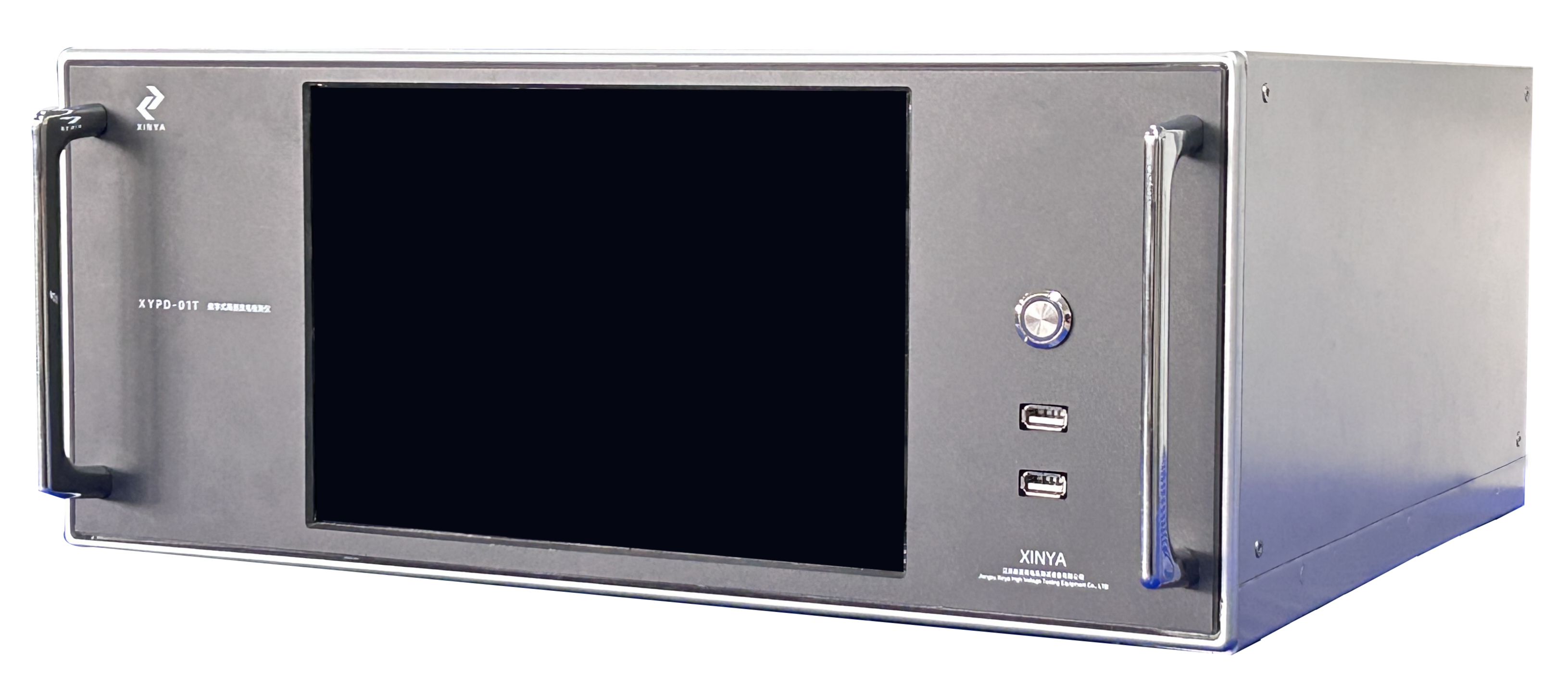
Digital Partial Discharge Detector
The XYPD-01T is a single-channel digital partial discharge detector combining synchronous sampling, digital signal processing, interference analysis, data storage and test report generation.
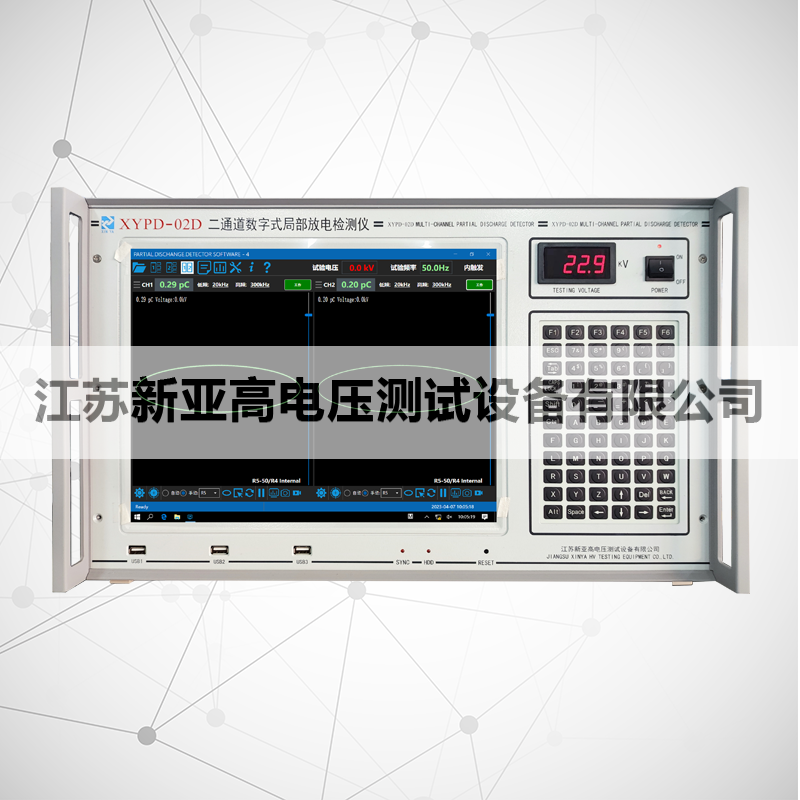
XYPD-02D Dual-Channel/XYPD-04D Four-Channel Digital Partial Discharge Detector
XYPD-02D dual-channel/04D four-channel digital partial discharge detector
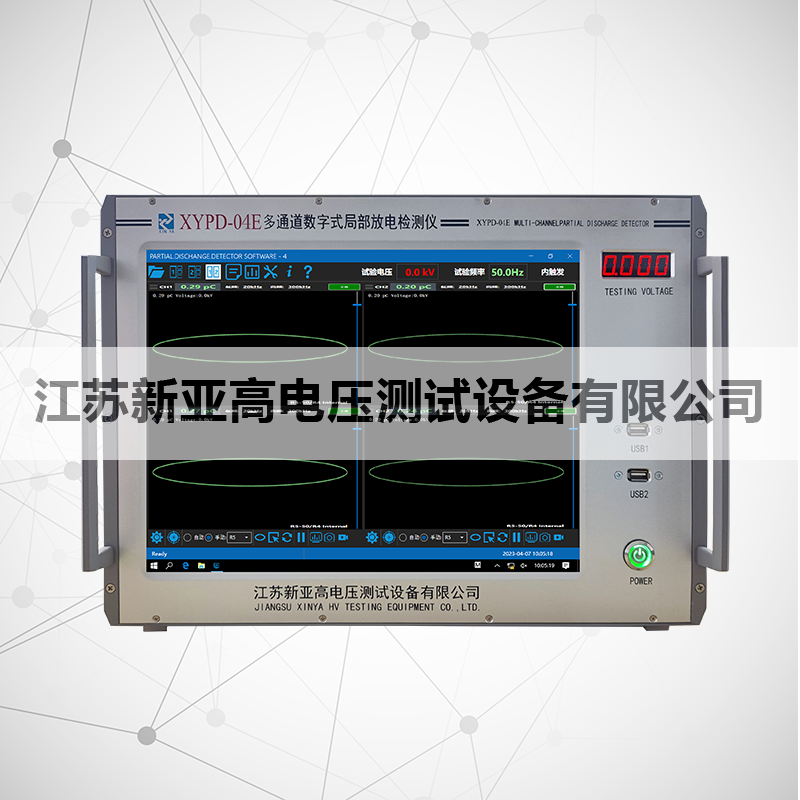
XYPD-02E Two-Channel / XYPD-04E Four-Channel Digital AC/DC Partial Discharge Detector
XYPD-02E Two-Channel / XYPD-04E Four-Channel Digital AC/DC Partial Discharge Detector
Need help confirming your product configuration?
Tell us about your test object, test project and site conditions — our technical team will help you shape the solution.